10+ years of experience designing digital products in fintech, B2B, and B2C.
More
I specialize in complex digital systems and user flows. I work closely with products, conduct research, improve existing solutions, and design new interfaces — from concept to implementation.




10+ years of experience designing digital products in fintech, B2B, and B2C.
I specialize in complex digital systems and user flows.
I work closely with products, conduct research, improve existing solutions, and design new interfaces — from concept to implementation.
VTB: Internal Portal for Bank Sales Employees
About the Project
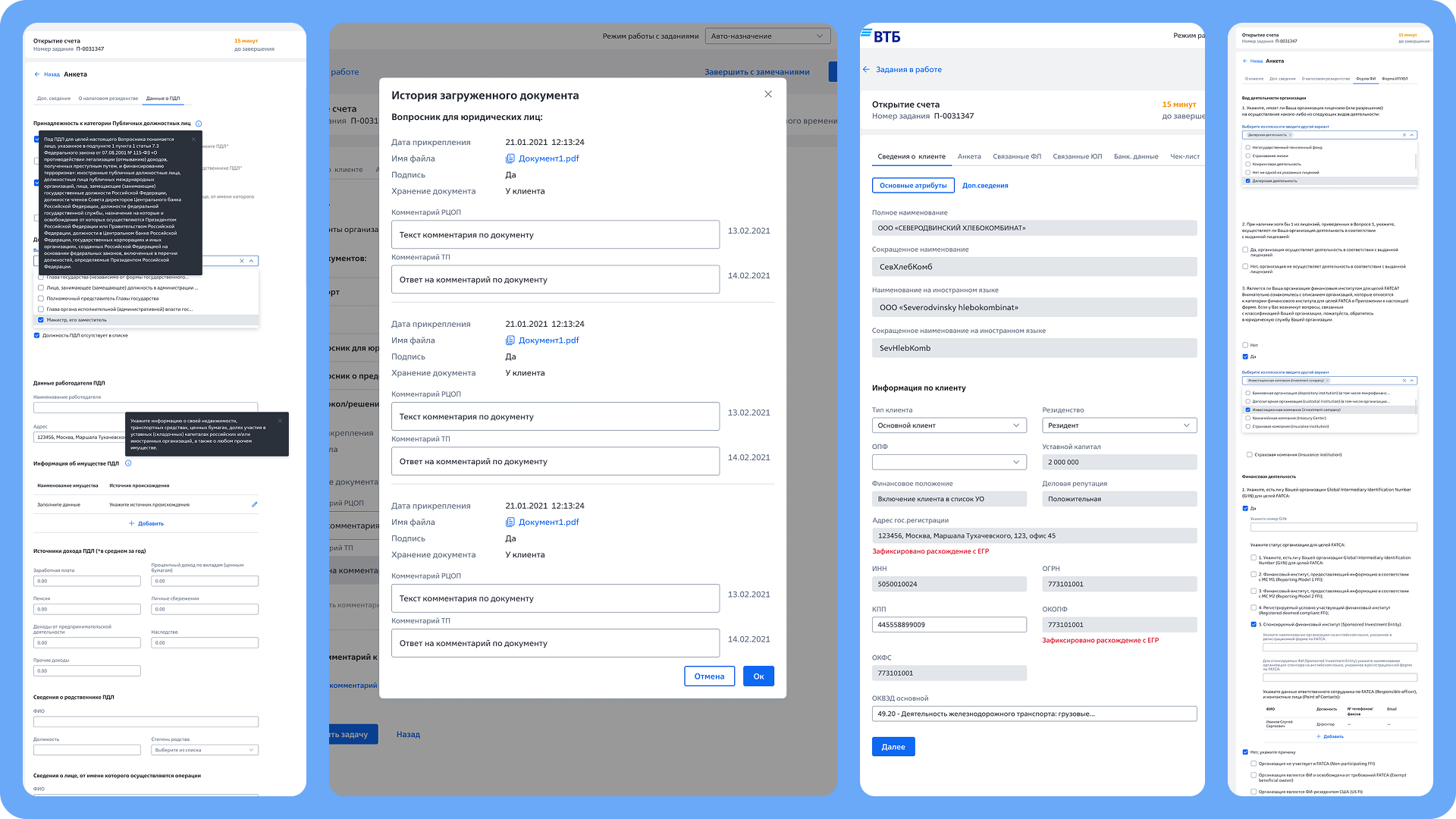
In 2022–2023, I worked as the lead product designer on OpsNext, an internal VTB bank portal for employees processing business account opening applications.
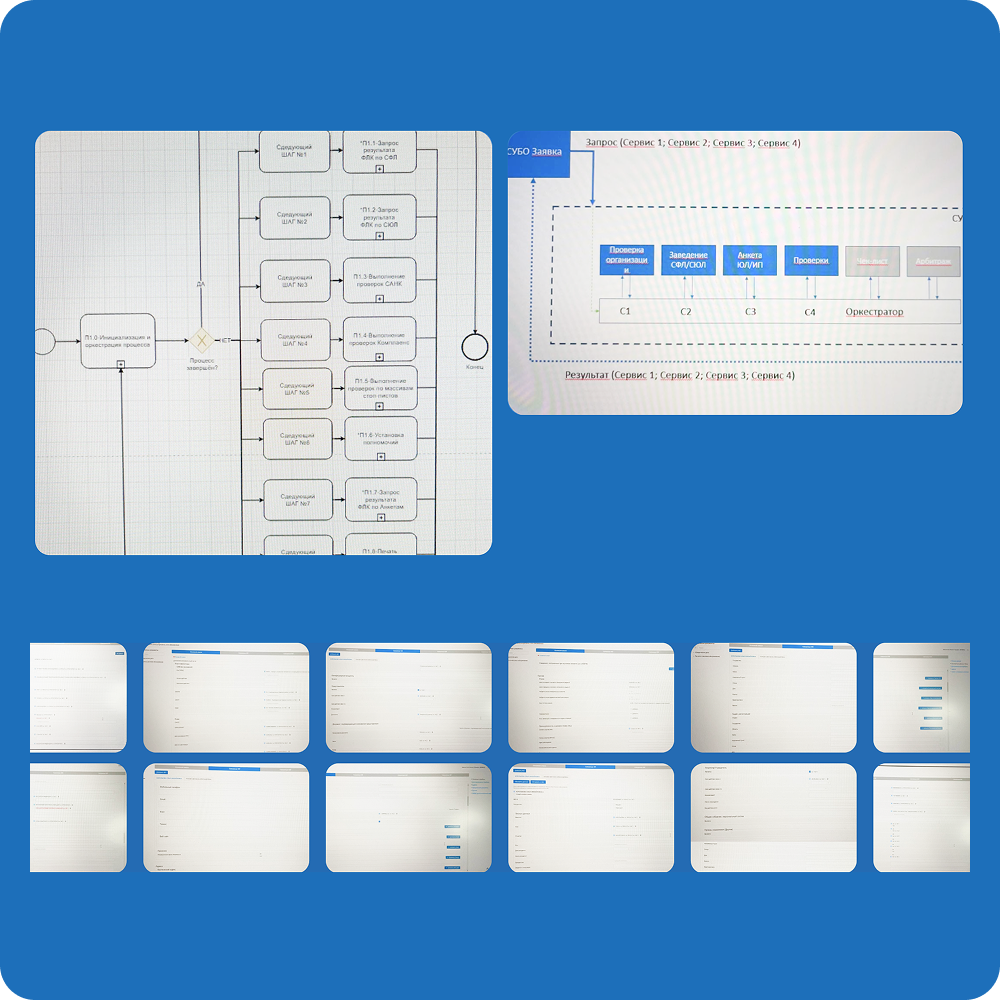
This was not a new product. The legacy portal had been in use for a long time and no longer met employees' needs. It lacked information about current tasks and processing times, while some essential tools and reference directories were outside the main workflow.
The project was therefore more than a visual redesign. We needed to turn a portal with a limited set of banking forms into a practical workspace for managing applications, time, and more advanced data processing.
My Role
I was the lead designer and fully responsible for the new version: from analyzing the existing process to designing the new portal structure, interactive prototypes, final interface, and design reviews.
I worked in a product team with the Product Owner, analysts, developers, and QA.
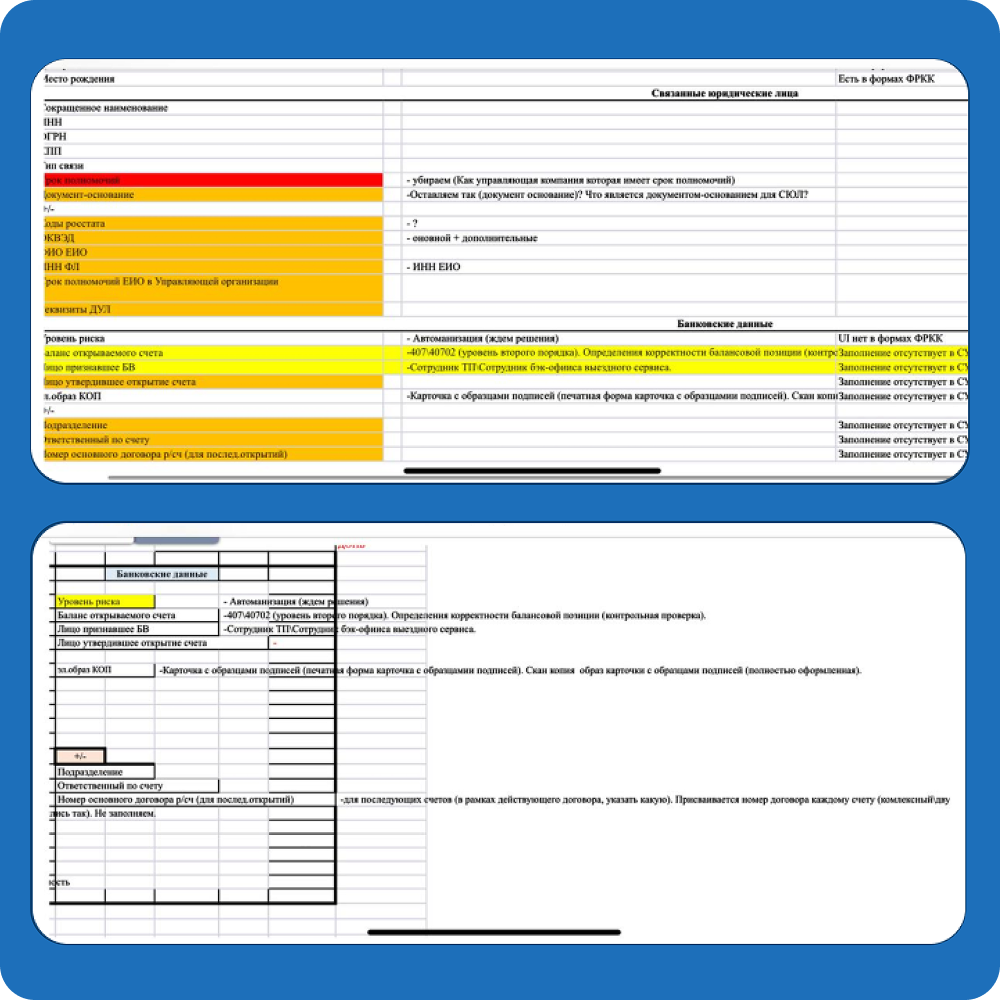
I started by looking at the employee's entire journey.
I examined what happened before an application was opened, what information and actions operators needed at each stage, where they spent time on additional tasks, and which features had to remain accessible throughout the process.
I created interactive prototypes of the new portal workflows, which were tested with employees from the relevant department to collect feedback.
Based on this, I organized the new product structure around operators' main tasks:
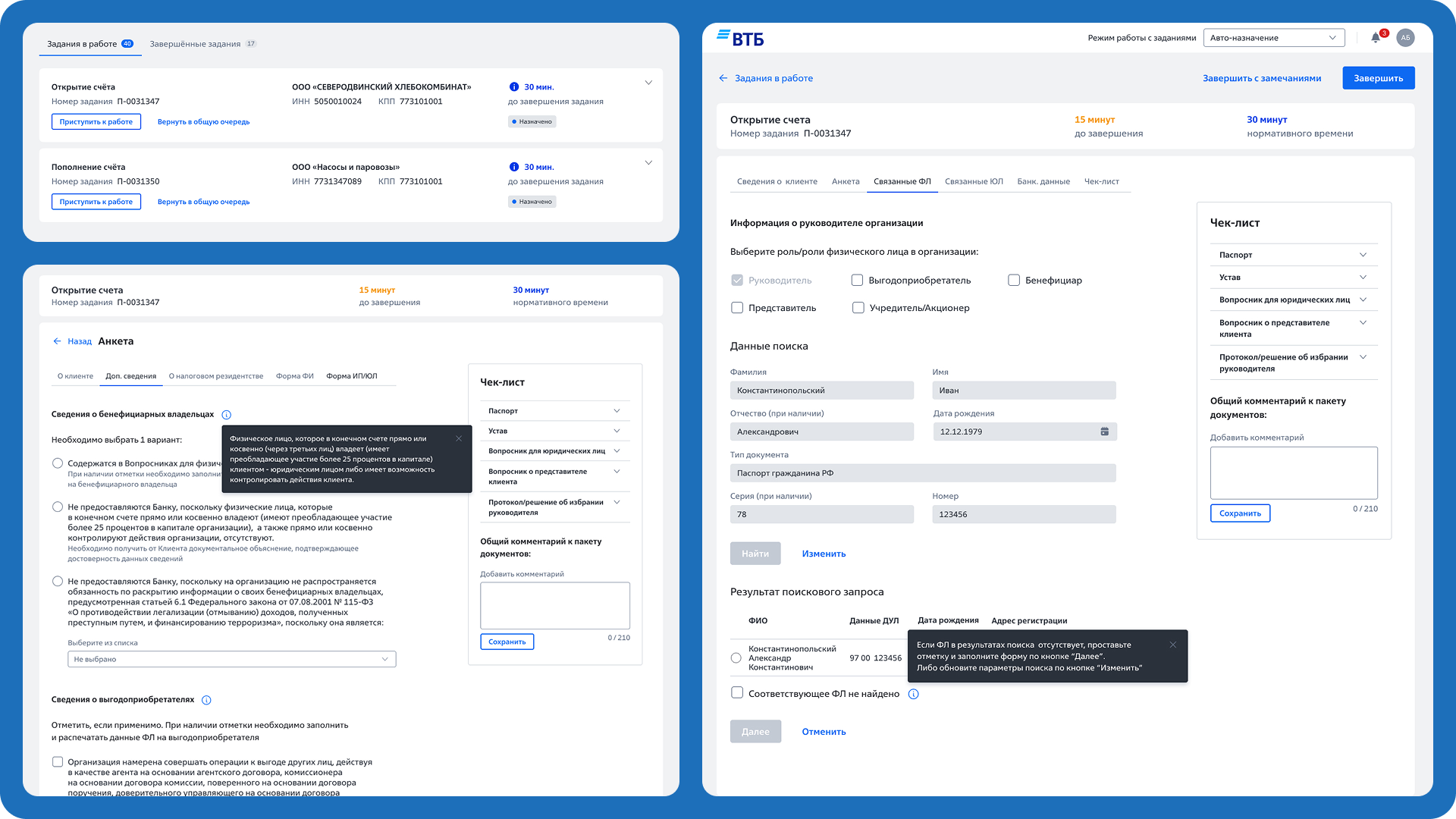
— Task and time management: viewing the queue of active applications, their statuses, and processing times.
— Application processing: working with required data and reference directories within the main interface.
— Continuous work context: keeping documents, checklists, and comments accessible at every stage.
Problems and Challenges
Managing the Application Queue
Previously, employees did not have a clear overview of their current workload: which applications were in progress, their statuses, and how long each one had been in processing.
Operators struggled to meet the existing 30-minute processing target because part of the work happened outside the main workflow. For example, to enter certain information, an employee opened the OKVED business activity classification directory in a separate window, found the correct value, returned to the application, and continued. Additional documents were handled in a similar way: finding and uploading them required external software rather than the product interface.
Limited Processing Time and Task Visibility
Outdated software and inconvenient legacy forms also increased processing time. Context was lost between sections because there was no checklist accessible throughout the workflow and no way to leave a comment on a specific field or document for later use by the same operator or a colleague.
Design Process
Organizing Application Management
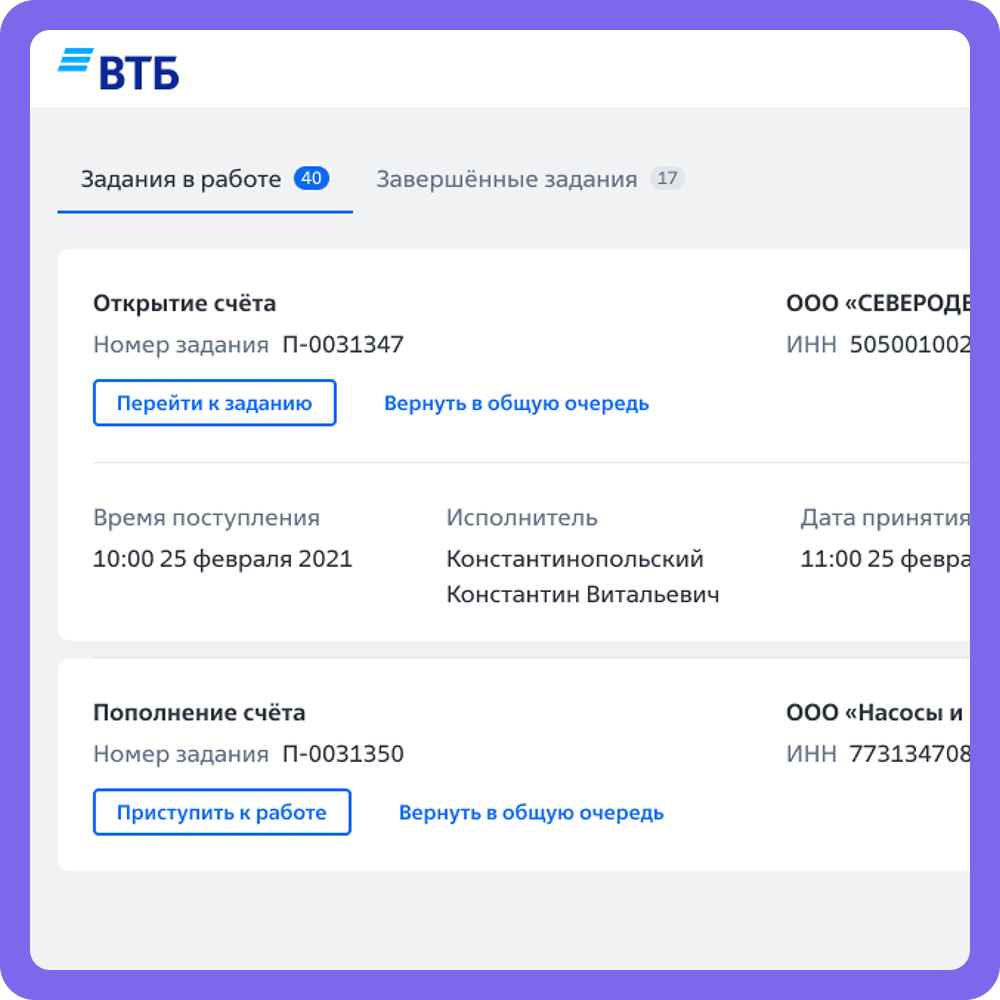
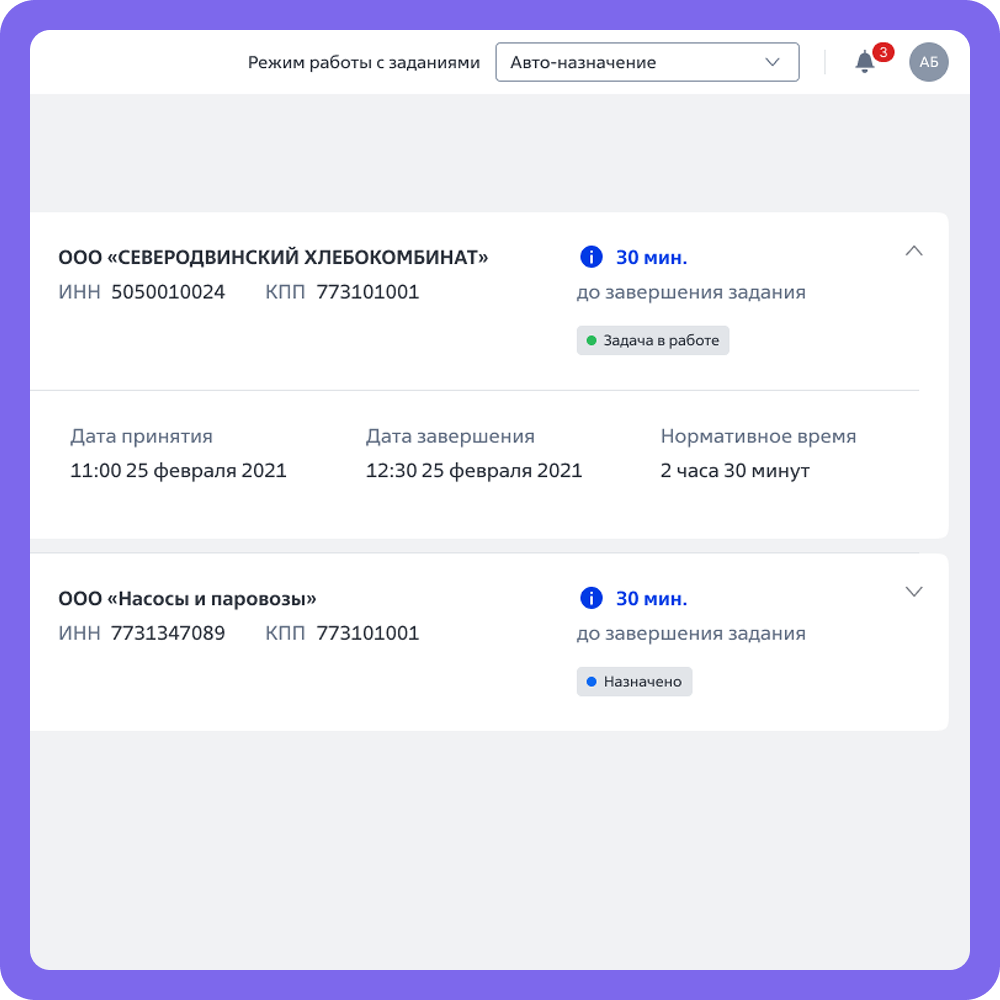
In the new version, I separated active and completed tasks and displayed key information in the work queue: company, application status, time received and assigned, and processing duration.
Operators could identify the next application to work on more quickly or return to an application already in progress with a clear understanding of its status.
The established processing target was 30 minutes per application. I integrated this directly into the interface. A timer started when an employee began working on a task and remained visible throughout processing.
It could also be paused or stopped. Time became part of the task's current state and was linked to a specific application.
Making Time Part of the Workflow
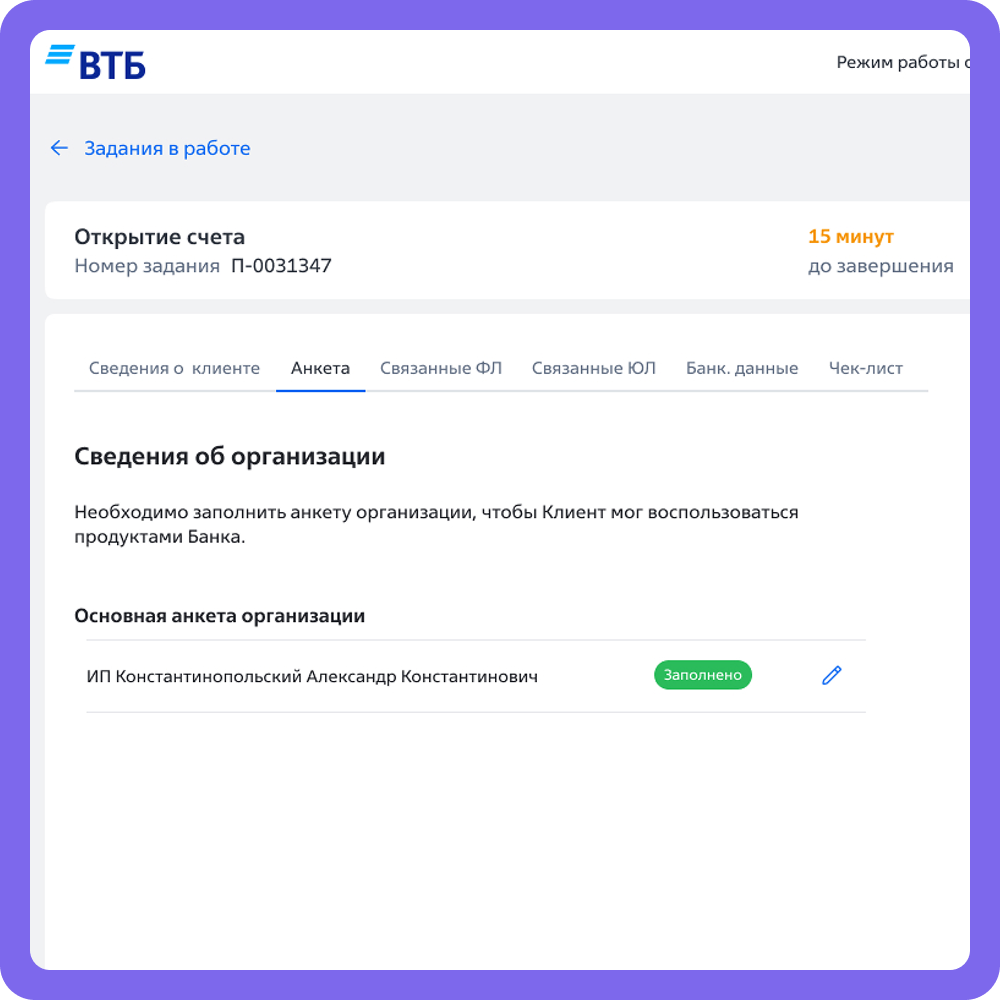
Once an employee started processing a task, the main application workflow began.
A large amount of banking information still had to be checked and entered. Instead of trying to artificially reduce these required steps, I focused on minimizing time spent on additional work outside the interface, such as using reference directories.
In the new portal, all necessary reference directories were integrated into the workflow. Employees could open them and search for information directly within the application interface.
The main application workflow was sequential, but real document handling was not. Different company documents could be needed at any point while entering information.
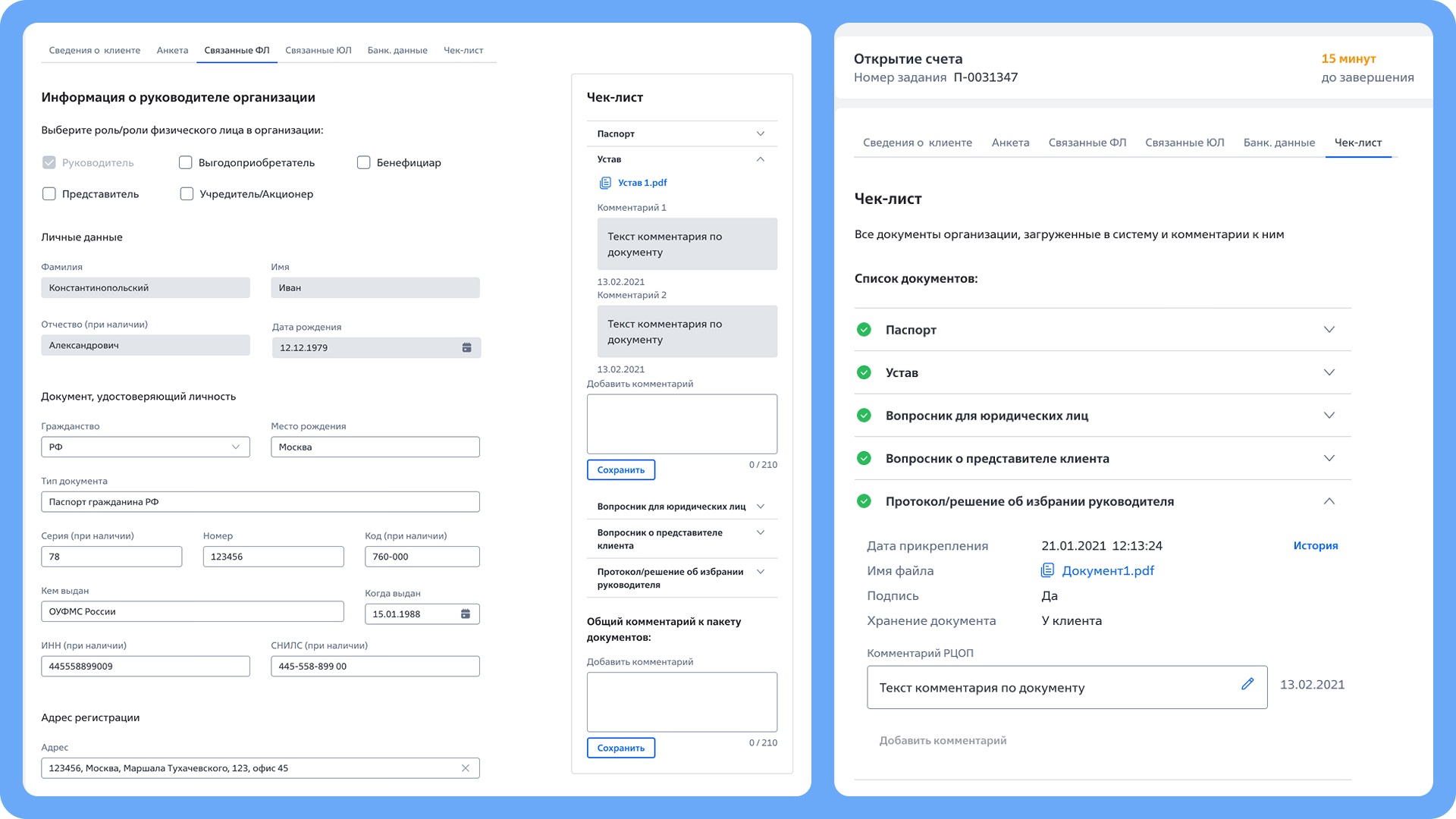
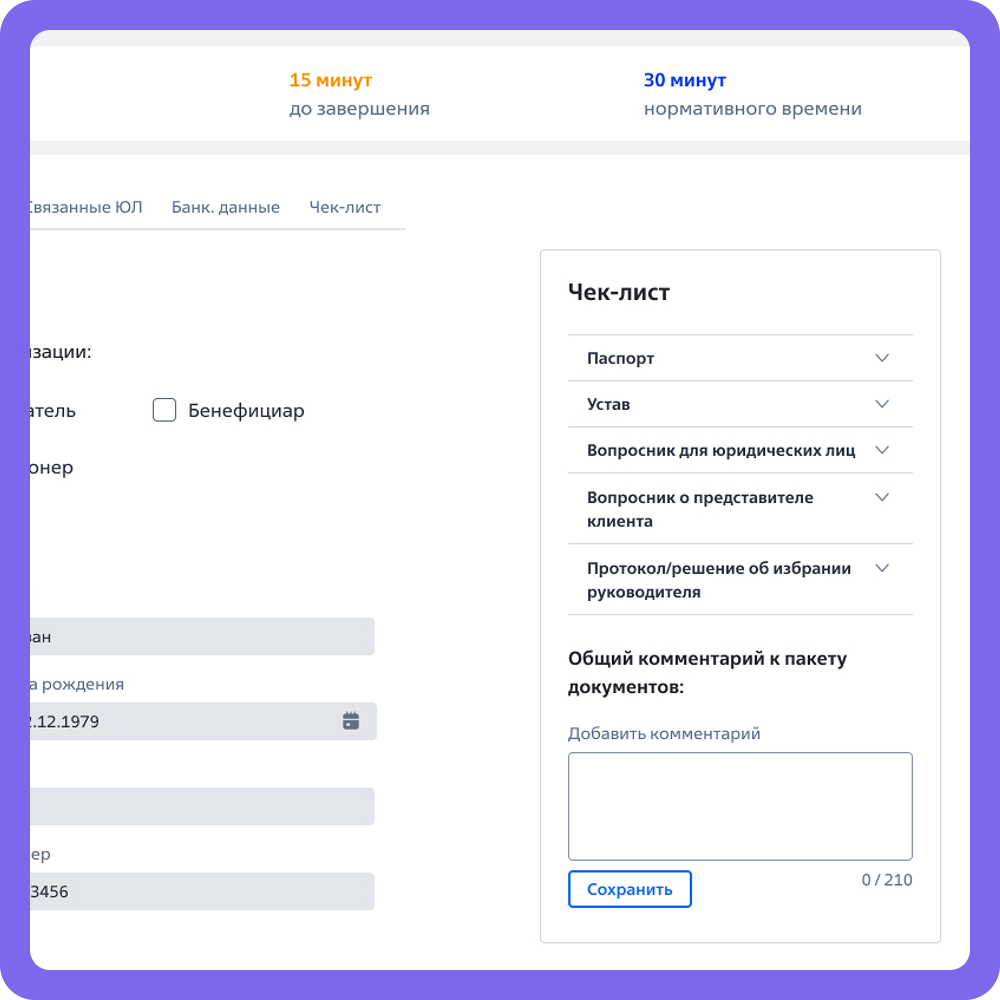
I moved documents and the checklist into a separate area accessible throughout the workflow, where employees could attach, view, and edit documents at any stage of application processing.
Employees could follow the main workflow while adding documents whenever they were needed.
The checklist also included a comments area. Operators could leave notes for themselves or information for colleagues.
Results and Learnings
During the project, we completely redesigned OpsNext's main workflow, from the moment a new application arrived to the completion of its processing.
Operators gained a modern workspace where they could view all active and completed tasks, monitor their statuses and processing times, work through applications step by step, and keep access to documents, checklists, and comments throughout the process.
The required reference directories were moved into the main interface, so employees no longer needed to perform some additional actions outside their workspace.
Quantitative reports on processing times were not available to the design team. However, according to employee feedback, the updated portal made it easier to meet the required time target. Reference directories and documents became part of the main interface, reducing the need to use external software.